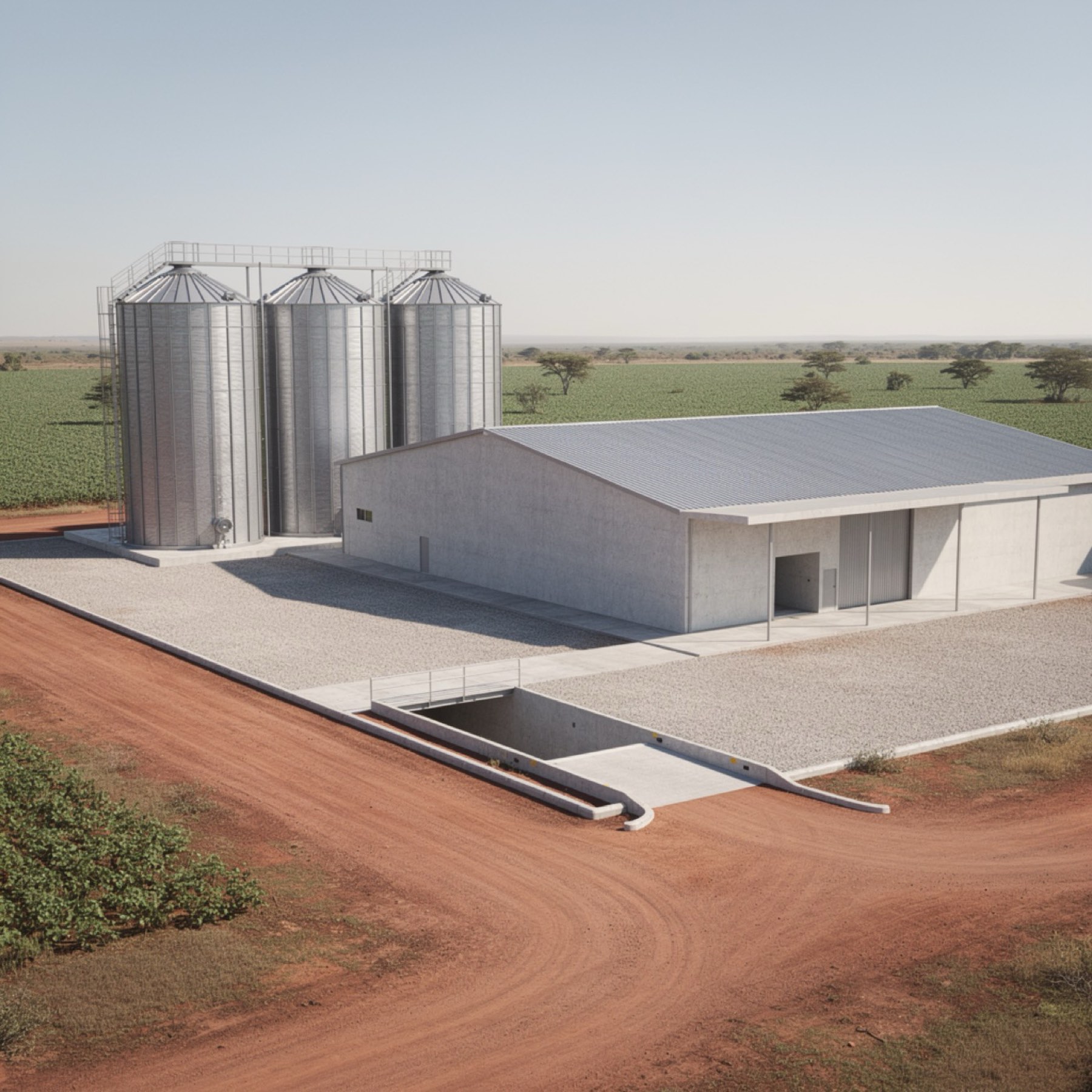
The site: three silos, the warehouse, the intake pit and the weighbridge.

Fee per tonne. Asset-backed. Two harvests a year. The rest of this page is numbers.
A leading Ugandan miller is on record saying the contamination happens after harvest, not in the field. That is exactly the stage A.B.I. is built for.
A.B.I.'s core income is a fixed service fee per tonne handled. It scales with volume across two harvests a year, and it keeps our grading independent, which is the thing a buyer is paying for.
The scale is modest on purpose. Breakeven is roughly one truckload a day against a corridor moving 1,500 tonnes a day at peak through one border crossing alone. A.B.I. fills one facility well, then builds the next.
Concept views of the plant, from the gate to the laboratory. Scroll across.
The site: three silos, the warehouse, the intake pit and the weighbridge.
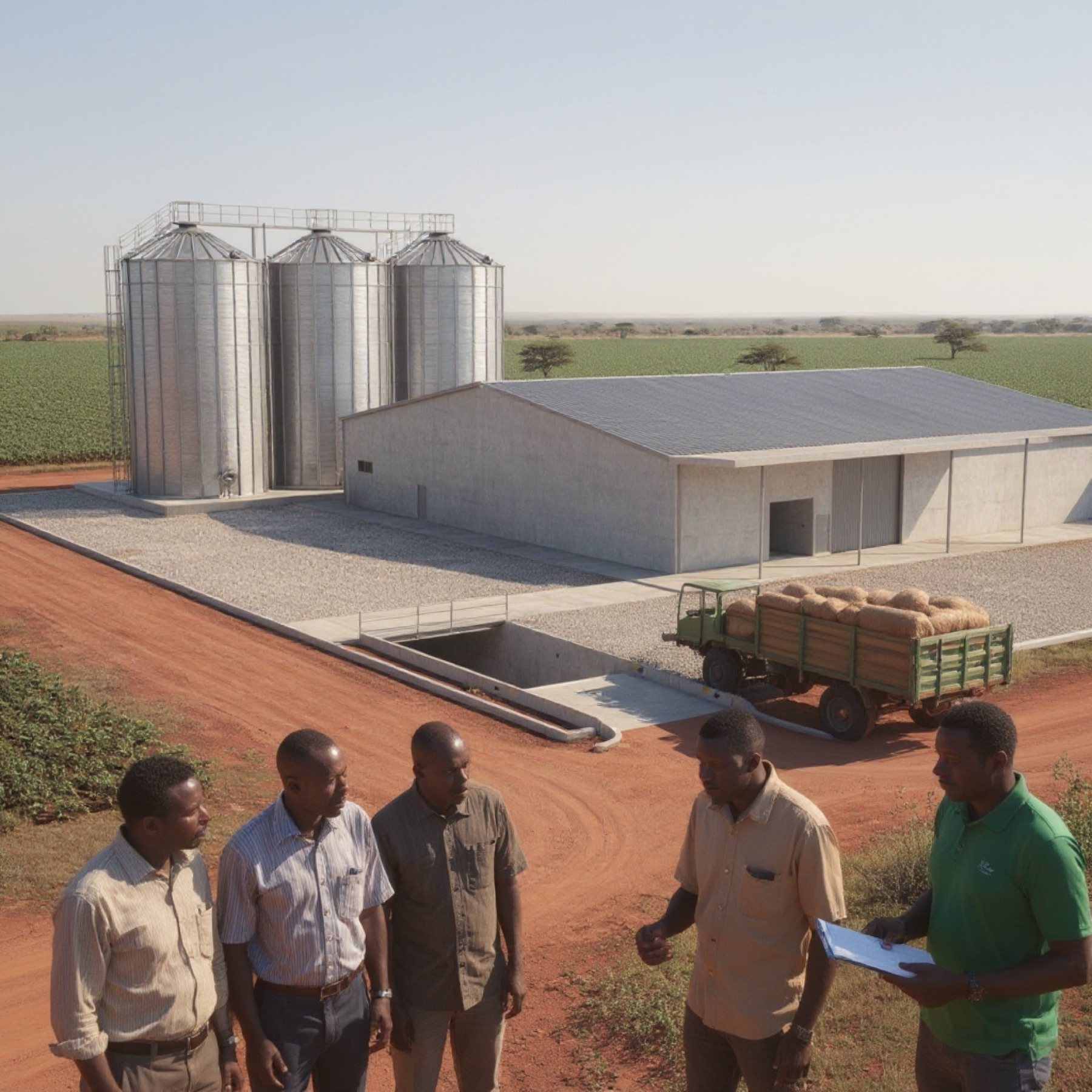
First light. Farmers' lorries queued at the gate, each lot named before it moves.
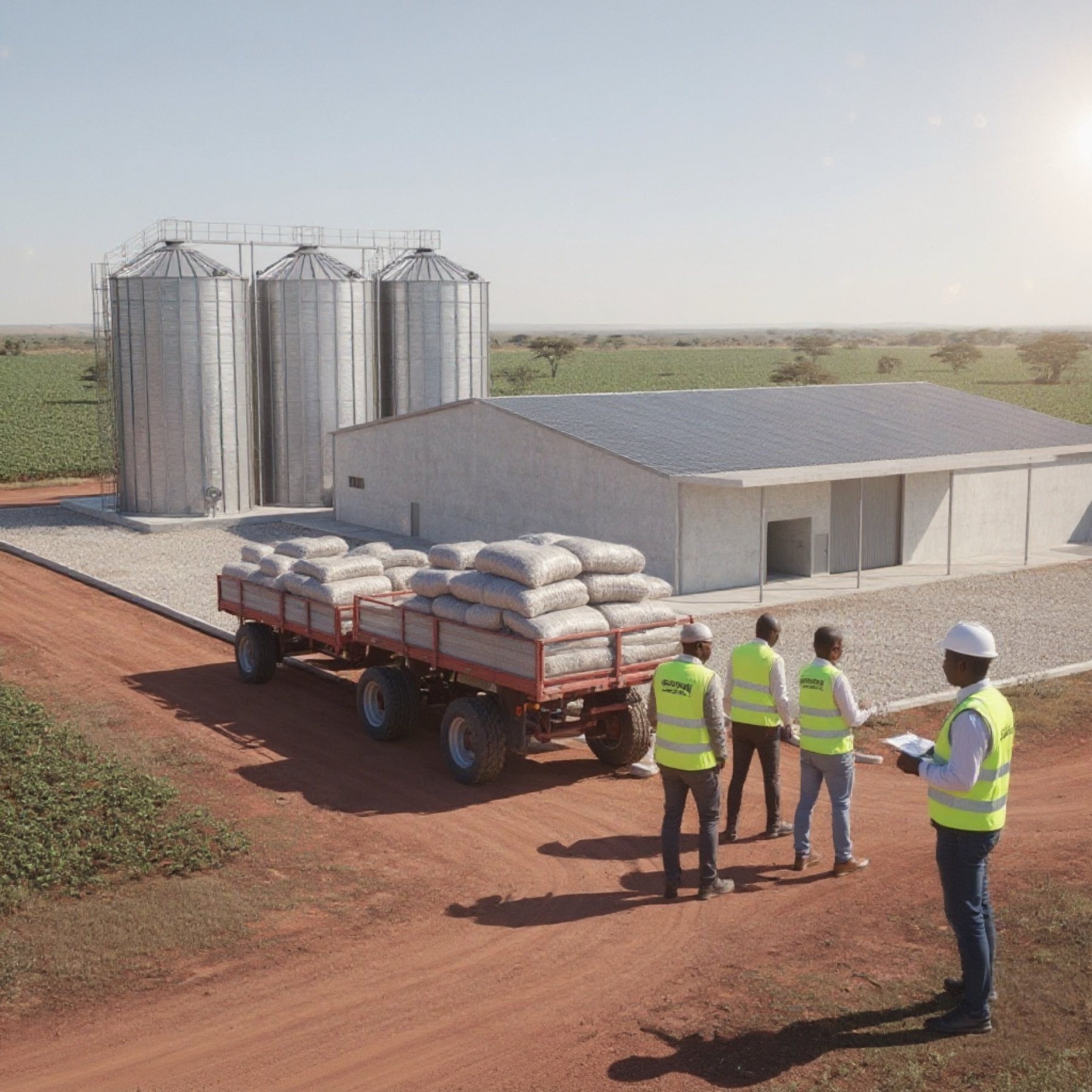
Intake. A tractor, a crew, and a site supervisor keeping the yard moving.
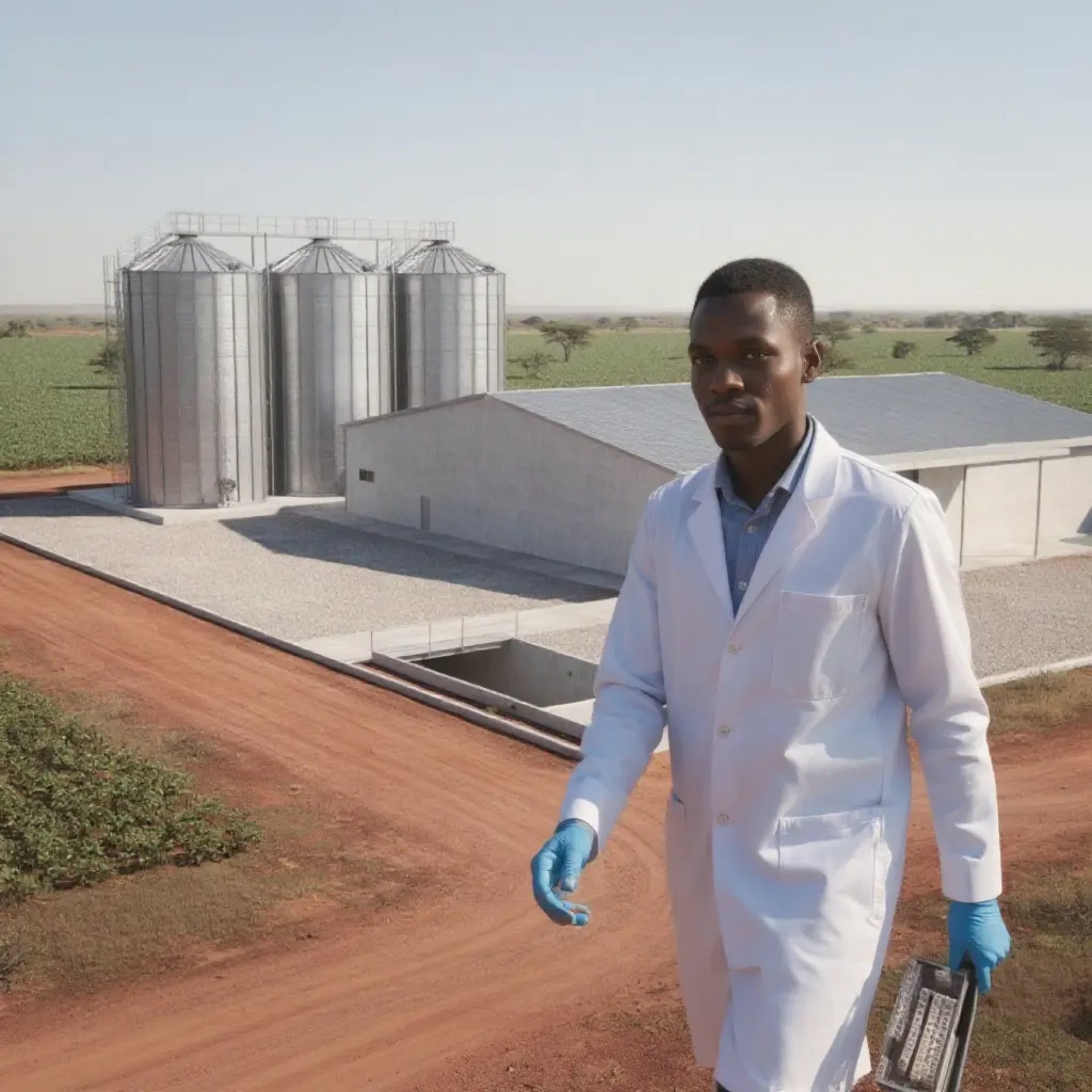
Samples on their way to the lab. Every lot, every time.
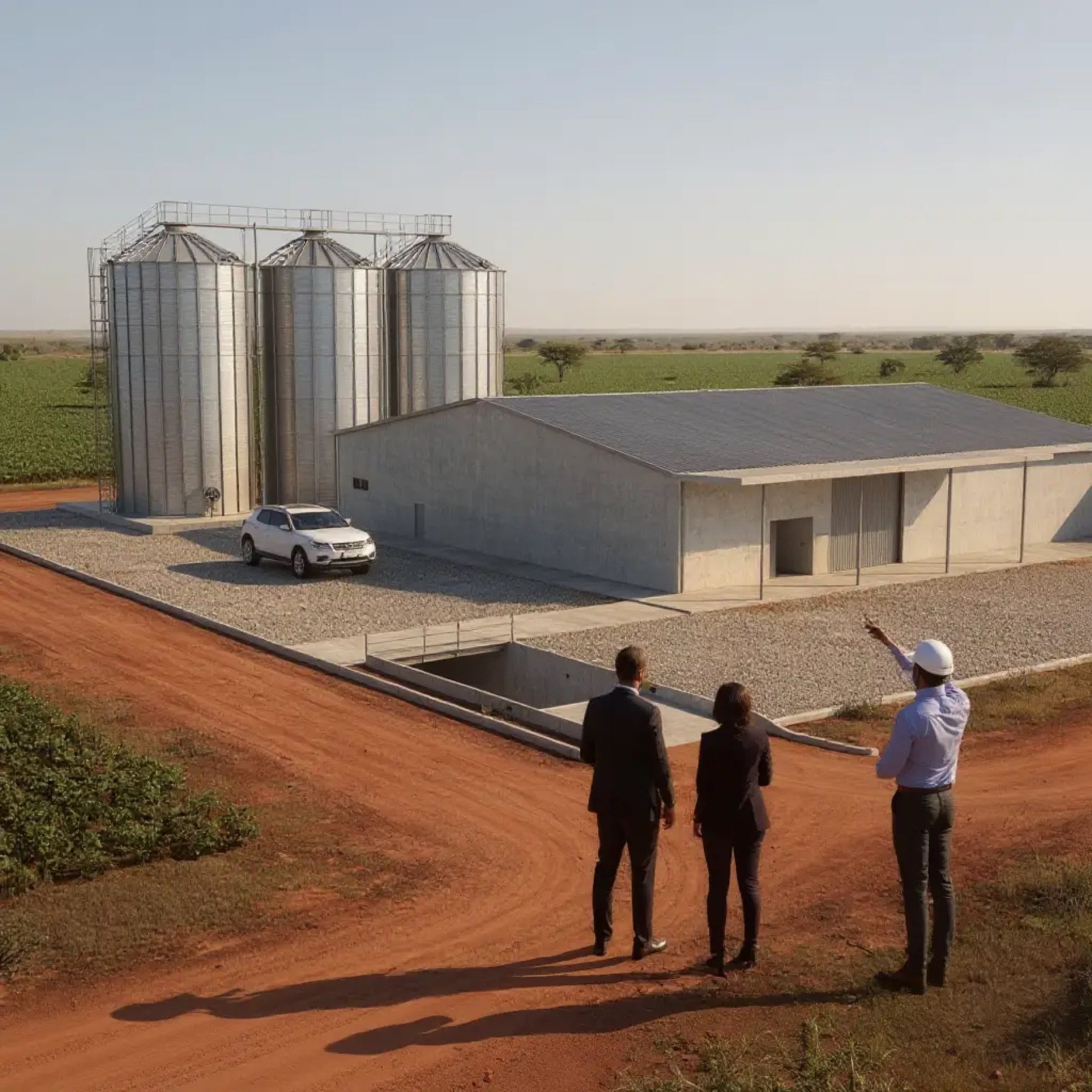
A site visit. Buyers and funders see exactly what they are backing.
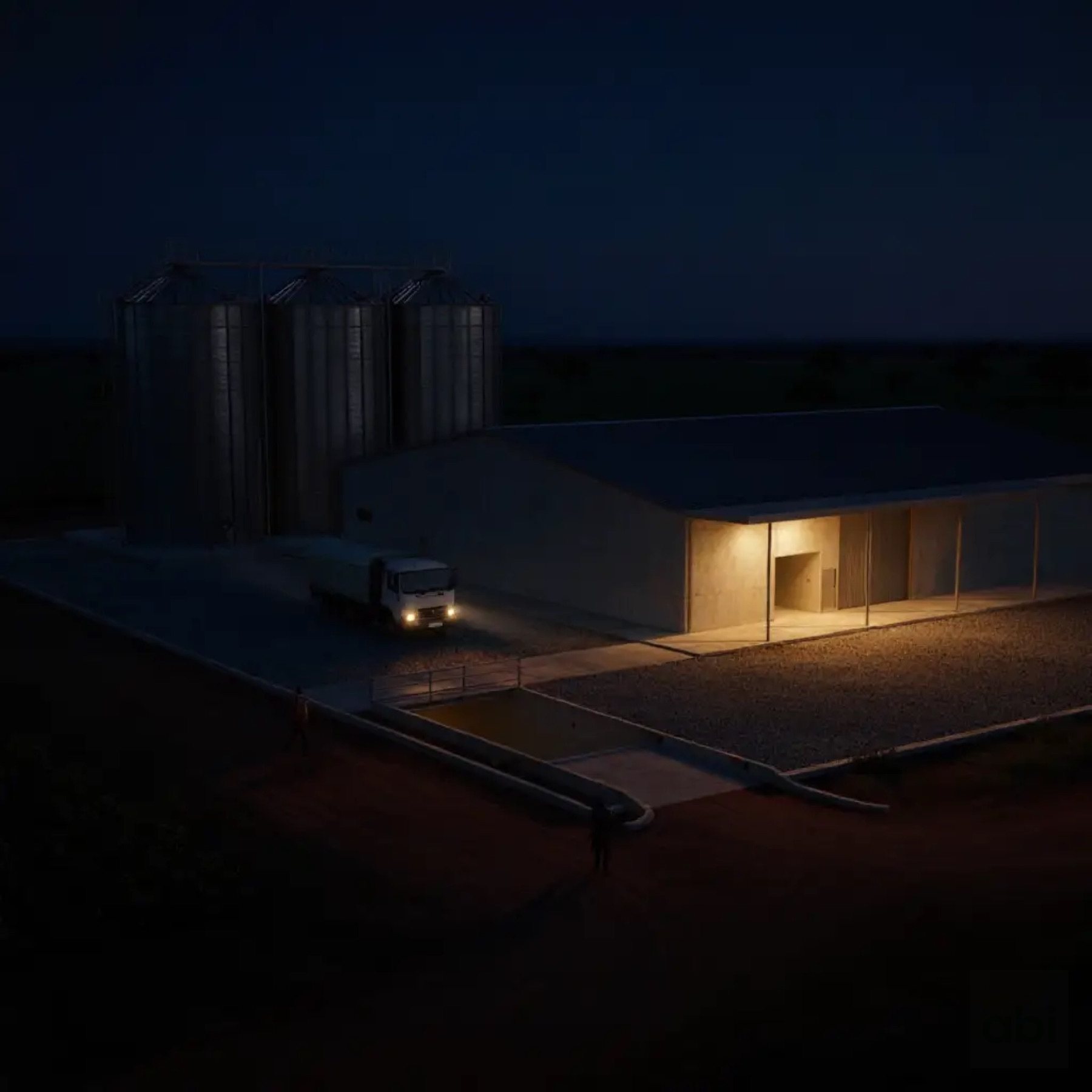
Dusk. The last lorry out, the lights on, the day's lots stored and certified.
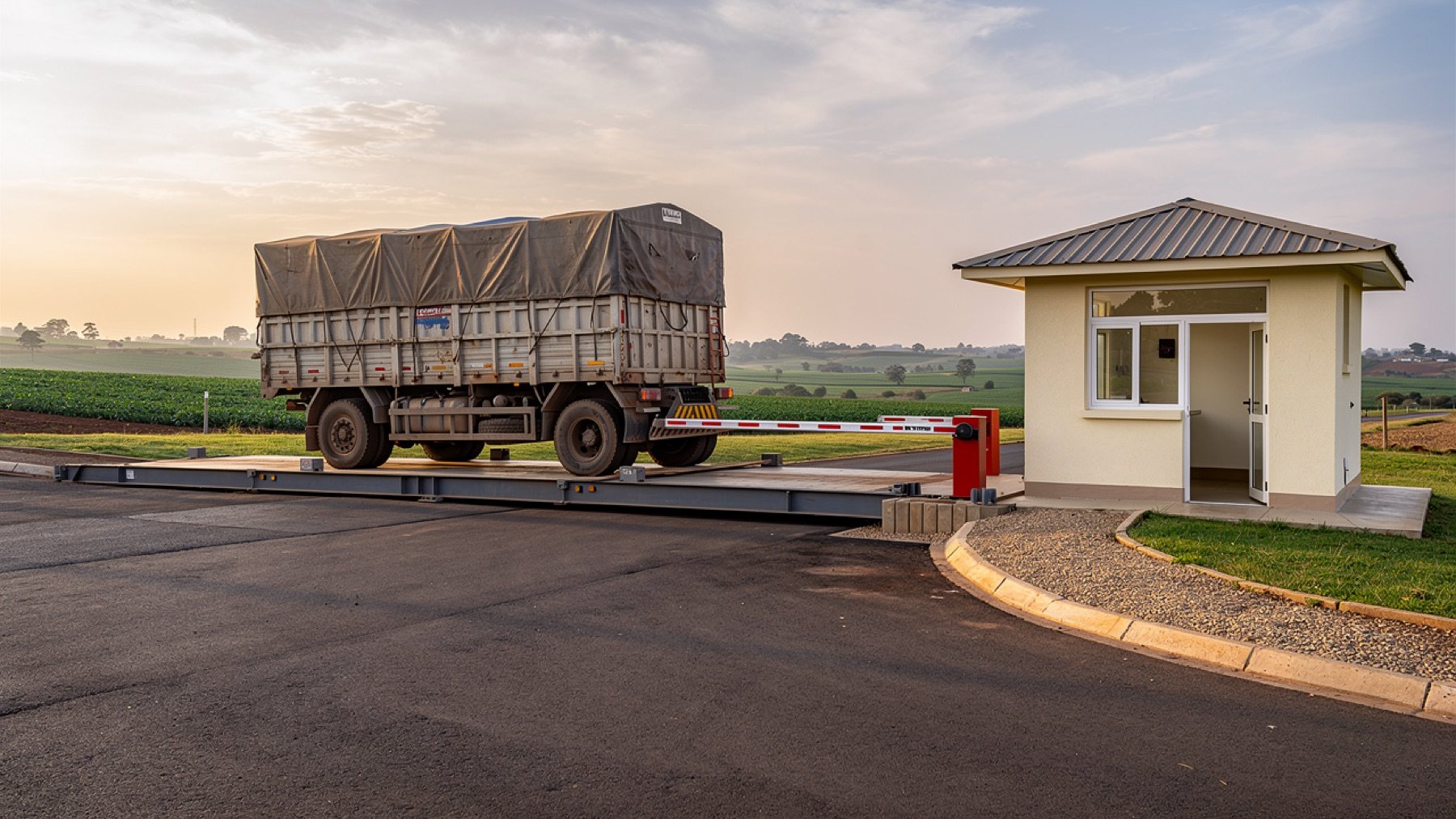
The weighbridge. Every lot is weighed and named before it goes any further.
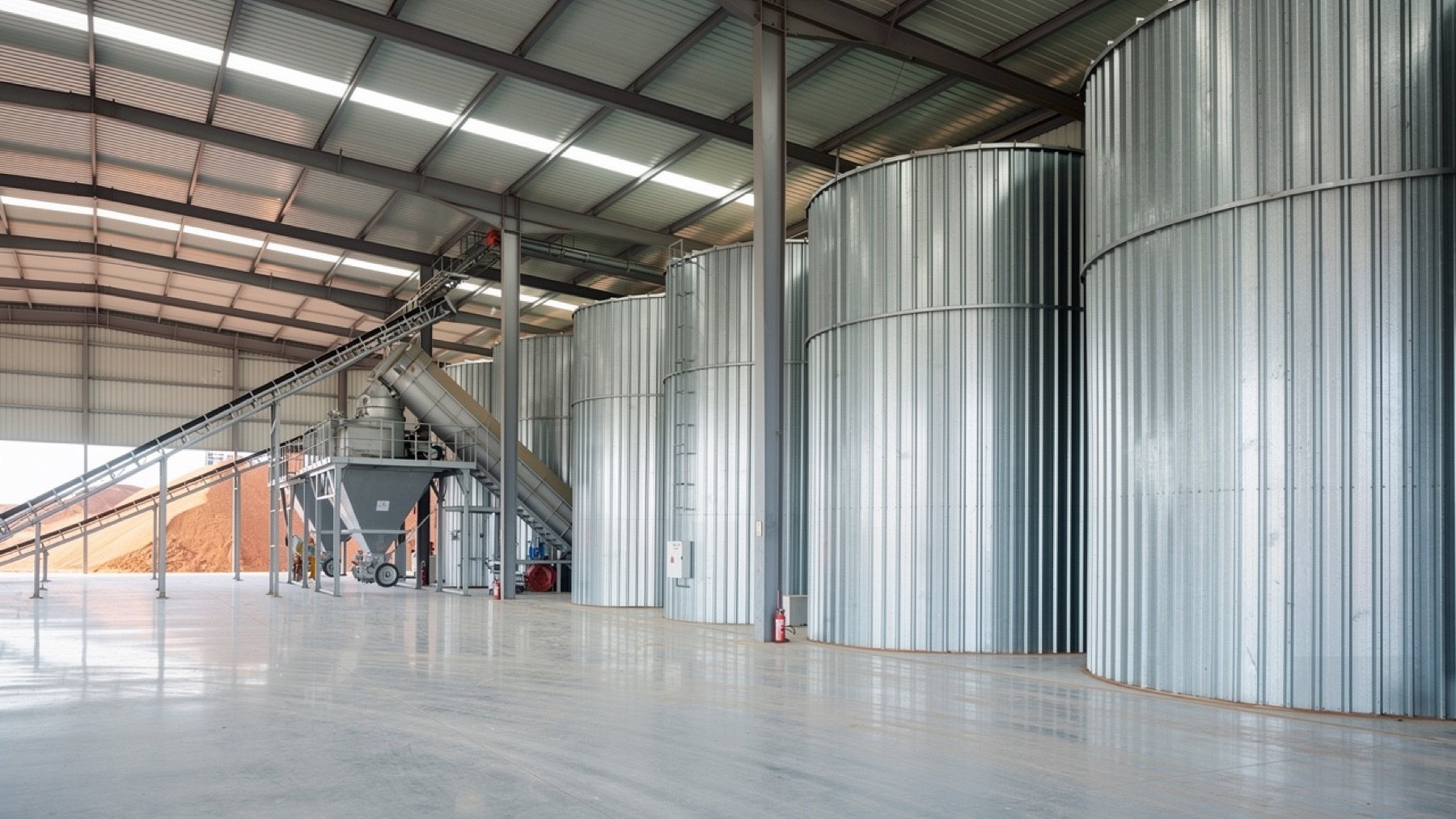
Segregated storage. One lot, one silo, one identity.
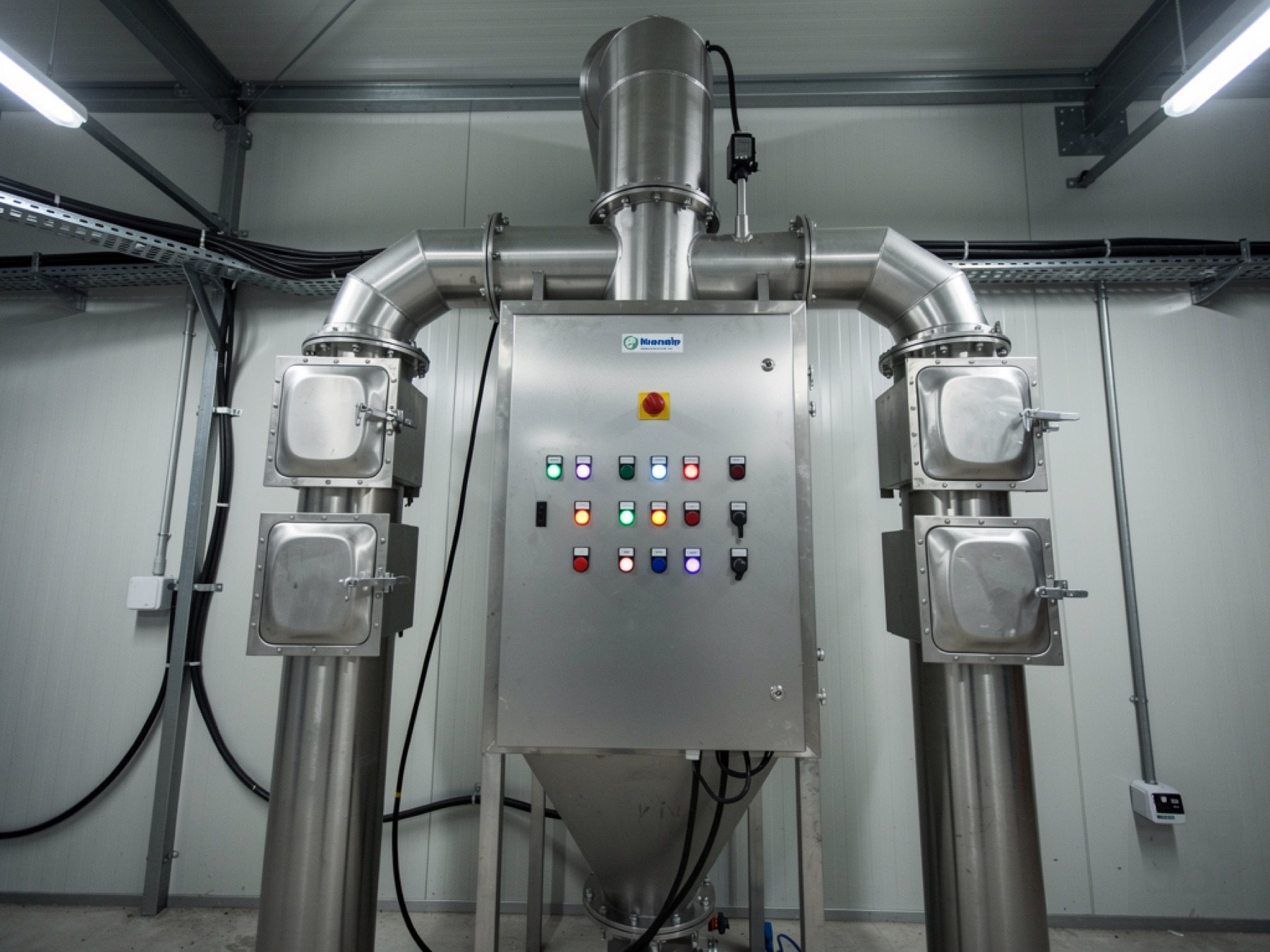
Drying under control, to a specification, on every lot.
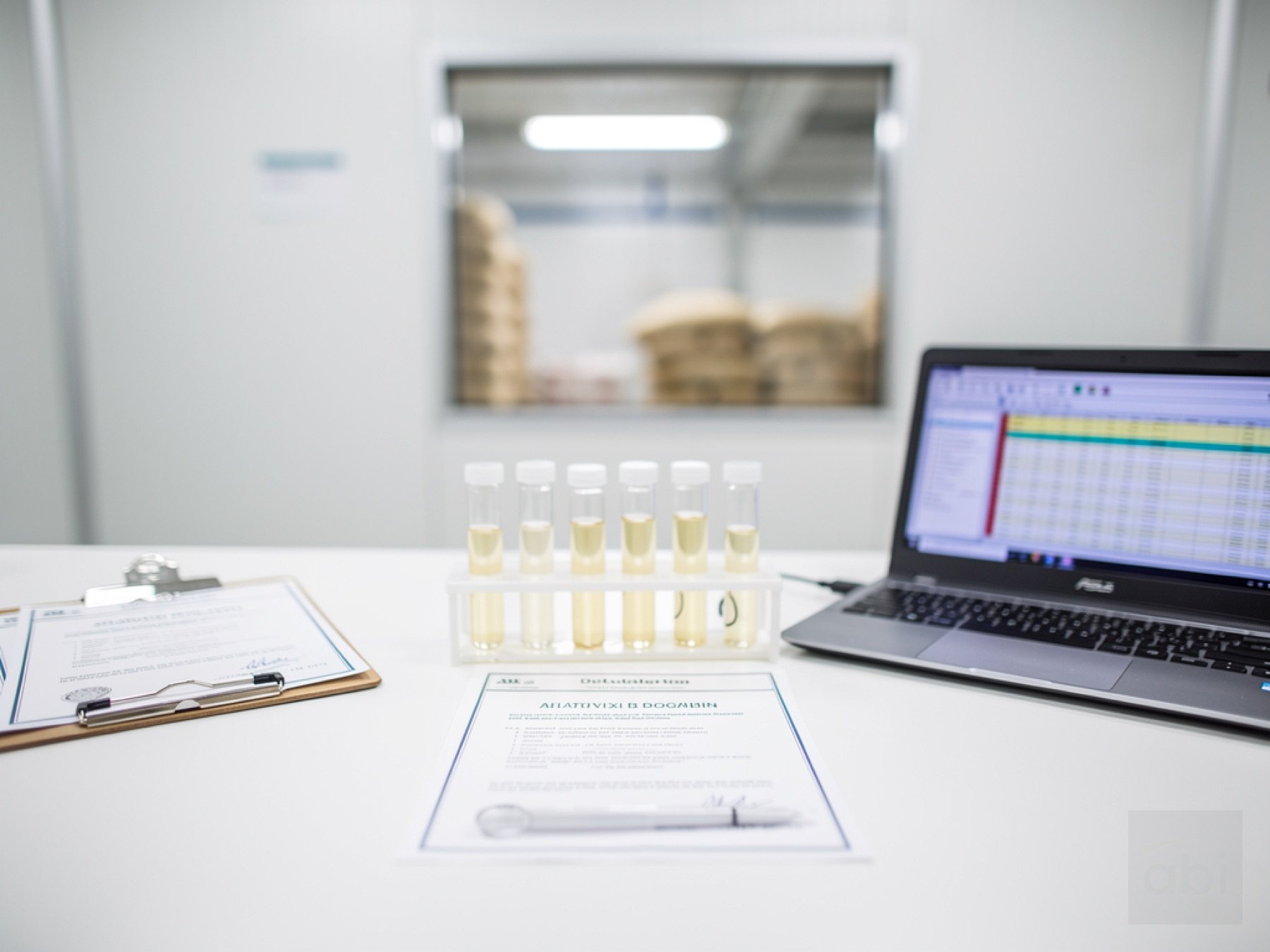
The laboratory. Aflatoxin and moisture on every intake lot, recorded and certified.
The buyers who matter most are required, or strongly incentivised, to buy Ugandan grain. What they need is a supplier who can document it.
Below the threshold at which mould and aflatoxin develop in storage. Dried under control, to a specification.
Aflatoxin and moisture on 100% of intake, against the EAC 5 ppb limit for B1, with the result recorded against the lot.
Segregated by grain type and quality tier from the weighbridge to the certificate. Fully auditable.
Cleaning, grading, drying, handling, automation.
Silo storage and engineering.

Mycotoxin and moisture testing.
Technology partners engaged on specification and design.
Grown in Uganda. Trusted anywhere.
What every certificate that leaves the gate is for
The full investment memorandum, the financial model and the technical specification are shared with qualified investors on request. Tell us who you are and we will send them.